
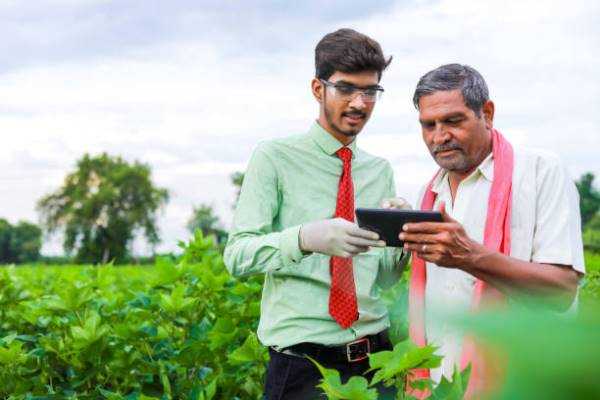
Description
Certification Name: Certificate in Rural Development Manager
Course Id: CRDM/Q0001.
Eligibility: Graduation or Equivalent.
Objective: The objective of the Certified Rural Development Manager course is to provide participants with the knowledge and skills necessary to design, implement, and manage development initiatives focused on improving social, economic, and environmental conditions in rural areas. The course covers rural economics, community engagement, project management, resource mobilization, policy frameworks, sustainable agriculture, infrastructure development, and monitoring and evaluation.
Duration: Three Month.
 How to Enroll and Get Certified in Your Chosen Course:
Step 1: Choose the course you wish to get certified in.
Step 2: Click on the “Enroll Now” button.
Step 3: Proceed with the enrollment process.
Step 4: Enter your billing details and continue to course fee payment.
Step 5: You will be redirected to the payment gateway. Pay the course and exam fee using one of the following methods:
Debit/Credit Card, Wallet, Paytm, Net Banking, UPI, or Google Pay.
Step 6: After successful payment, you will receive your study material login ID and password via email within 48 hours of fee payment.
Step 7: Once you complete the course, take the online examination.
Step 8: Upon passing the examination, you will receive:
• A soft copy (scanned) of your certificate via email within 7 days of examination.
• A hard copy (original with official seal and signature) sent to your address within 45 day of declaration of result.
Step 9: After certification, you will be offered job opportunities aligned with your area of interest.
Online Examination Detail:
Duration- 60 minutes.
No. of Questions- 30. (Multiple Choice Questions).
Maximum Marks- 100, Passing Marks- 40%.
There is no negative marking in this module.
| Marking System: | ||||||
| S.No. | No. of Questions | Marks Each Question | Total Marks | |||
| 1 | 10 | 5 | 50 | |||
| 2 | 5 | 4 | 20 | |||
| 3 | 5 | 3 | 15 | |||
| 4 | 5 | 2 | 10 | |||
| 5 | 5 | 1 | 5 | |||
| 30 | 100 | |||||
| How Students will be Graded: | ||||||
| S.No. | Marks | Grade | ||||
| 1 | 91-100 | O (Outstanding) | ||||
| 2 | 81-90 | A+ (Excellent) | ||||
| 3 | 71-80 | A (Very Good) | ||||
| 4 | 61-70 | B (Good) | ||||
| 5 | 51-60 | C (Average) | ||||
| 6 | 40-50 | P (Pass) | ||||
| 7 | 0-40 | F (Fail) | ||||
Key Benefits of Certification- Earning a professional certification not only validates your skills but also enhances your employability. Here are the major benefits you gain:
Practical, Job-Ready Skills – Our certifications are designed to equip you with real-world, hands-on skills that match current industry demands — helping you become employment-ready from day one.
Lifetime Validity – Your certification is valid for a lifetime — no renewals or expirations. It serves as a permanent proof of your skills and training.
Lifetime Certificate Verification – Employers and institutions can verify your certification anytime through a secure and reliable verification system — adding credibility to your qualifications.
Industry-Aligned Certification –All certifications are developed in consultation with industry experts to ensure that what you learn is current, relevant, and aligned with market needs.
Preferred by Employers – Candidates from ISO-certified institutes are often prioritized by recruiters due to their exposure to standardized, high-quality training.
Free Job Assistance Based on Your Career Interests – Receive personalized job assistance and career guidance in your preferred domain, helping you land the right role faster.
Assessment Modules:
Module 1: Fundamentals of Rural Development: Concepts and principles of rural development, Rural socio-economic structures, Key challenges in rural areas, Role and responsibilities of a rural development manager, Stakeholder identification and engagement, Ethical and cultural considerations in rural development.
Module 2: Project Planning and Design for Rural Development: Needs assessment and baseline surveys, Setting objectives and goals, Designing rural development projects, Resource planning and budgeting, Risk analysis and mitigation strategies, Participatory planning methods.
Module 3: Implementation and Management: Organizing project teams and resources, Scheduling and time management, Coordination with government and NGOs, Monitoring project progress, Problem-solving and conflict management, Documentation and reporting.
Module 4: Community Mobilization and Capacity Building: Techniques for community engagement, Training and skills development, Building local leadership and governance, Promoting gender equality and inclusion, Communication strategies, Participatory monitoring and feedback mechanisms.
Module 5: Monitoring, Evaluation, and Impact Assessment: Developing M&E frameworks, Data collection and analysis, Impact assessment methodologies, Reporting and dissemination of findings, Using evaluation for project improvement, Sustainability assessment.
Module 6: Sustainability and Policy Advocacy: Sustainability planning and resource mobilization, Strengthening local institutions, Environmental management and conservation, Policy analysis and advocacy, Scaling up successful projects, Continuous learning and adaptation.
🎓 Certificate in Rural Development Manager
A Certificate in Rural Development Manager prepares professionals to plan, implement, and supervise rural development initiatives focused on livelihoods, agriculture, infrastructure, health, education, water management, and financial inclusion.
Rural Development Managers coordinate with government agencies, NGOs, financial institutions, self-help groups (SHGs), Farmer Producer Organizations (FPOs), and community leaders to ensure sustainable socio-economic growth. They are responsible for project planning, budgeting, monitoring, reporting, and impact evaluation.
Certified professionals are in demand across programs and institutions such as National Rural Livelihoods Mission, National Bank for Agriculture and Rural Development (NABARD), PRADAN, Tata Trusts, and CSR departments of major corporates engaged in rural transformation initiatives.
🔹 Career Opportunities in India
1️⃣ Rural Development Officer
Support field-level implementation, beneficiary coordination, documentation, and monitoring activities.
Salary: ₹3 – ₹6 LPA
2️⃣ Program Coordinator
Manage field teams, supervise project activities, ensure compliance, and maintain performance reports.
Salary: ₹4 – ₹8 LPA
3️⃣ Rural Development Manager
Oversee complete rural development programs, manage budgets, coordinate stakeholders, and ensure project impact and sustainability.
Salary: ₹6 – ₹14 LPA
4️⃣ Regional Development Manager / CSR Head
Lead multi-district projects, design development strategies, manage large budgets, and coordinate with government authorities.
Income Potential: ₹10 – ₹25+ LPA
📈 Career Growth Path
Rural Officer → Program Coordinator → Rural Development Manager → Regional Manager → Development Director / CSR Leader
With advanced expertise in project management, policy analysis, rural marketing, agri-business integration, and impact assessment, professionals can progress into senior leadership roles within 5–10 years.
🏢 Industries Hiring
-
Government Rural Development Departments
-
NGOs & Development Organizations
-
CSR Divisions of Corporate Companies
-
Microfinance & Financial Inclusion Institutions
-
Agri-Business & Livelihood Promotion Agencies
-
International Development Agencies
🎯 Ideal For
-
Graduates in Rural Development, Social Work, Agriculture, Public Administration, or Management
-
Professionals working in SHGs, FPOs, and livelihood missions
-
NGO and CSR professionals seeking managerial roles
-
Individuals passionate about rural transformation and sustainable development
-
Career switchers into development project management
