
Description
Course Name: Certificate in Agri Food Processing
Course Id: CAFP/Q1001.
Eligibility: 10th Grade(High School) or Equivalent.
Duration: One Month.
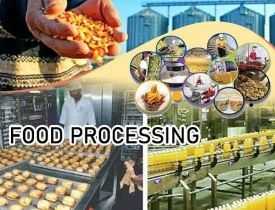
Objective: This course provides learners with a comprehensive understanding of agricultural food processing techniques and technologies. It covers post-harvest handling, preservation methods, value addition, quality control, and packaging of agri-food products.
🎓 How to Enroll and Get Certified in Your Chosen Course:
✔️ Step 1: Choose the course you wish to get certified in.
✔️ Step 2: Click on the “Enroll Now” button.
✔️ Step 3: Proceed with the enrollment process.
✔️ Step 4: Enter your billing details and continue to course fee payment.
✔️ Step 5: You will be redirected to the payment gateway. Pay the course and exam fee using one of the following methods:
Debit/Credit Card, Wallet, Paytm, Net Banking, UPI, or Google Pay.
✔️ Step 6: After successful payment, you will receive your study material login ID and password via email within 48 hours of fee payment.
✔️ Step 7: Once you complete the course, take the online examination.
✔️ Step 8: Upon passing the examination, you will receive:
• A soft copy (scanned) of your certificate via email within 7 days of examination.
• A hard copy (original with official seal and signature) sent to your address within 45 day of declaration of result.
✔️ Step 9: After certification, you will be offered job opportunities aligned with your area of interest.
Online Examination Detail:
Duration- 60 minutes.
No. of Questions- 30. (Multiple Choice Questions).
Maximum Marks- 100, Passing Marks- 40%.
There is no negative marking in this module.
| Marking System: | ||||||
| S.No. | No. of Questions | Marks Each Question | Total Marks | |||
| 1 | 10 | 5 | 50 | |||
| 2 | 5 | 4 | 20 | |||
| 3 | 5 | 3 | 15 | |||
| 4 | 5 | 2 | 10 | |||
| 5 | 5 | 1 | 5 | |||
| 30 | 100 | |||||
| How Students will be Graded: | ||||||
| S.No. | Marks | Grade | ||||
| 1 | 91-100 | O (Outstanding) | ||||
| 2 | 81-90 | A+ (Excellent) | ||||
| 3 | 71-80 | A (Very Good) | ||||
| 4 | 61-70 | B (Good) | ||||
| 5 | 51-60 | C (Average) | ||||
| 6 | 40-50 | P (Pass) | ||||
| 7 | 0-40 | F (Fail) | ||||
🌟 Key Benefits of Certification- Earning a professional certification not only validates your skills but also enhances your employability. Here are the major benefits you gain:
✅ Practical, Job-Ready Skills – Our certifications are designed to equip you with real-world, hands-on skills that match current industry demands — helping you become employment-ready from day one.
📜 Lifetime Validity – Your certification is valid for a lifetime — no renewals or expirations. It serves as a permanent proof of your skills and training.
🔍 Lifetime Certificate Verification – Employers and institutions can verify your certification anytime through a secure and reliable verification system — adding credibility to your qualifications.
🎯 Industry-Aligned Certification –All certifications are developed in consultation with industry experts to ensure that what you learn is current, relevant, and aligned with market needs.
💼 Preferred by Employers – Candidates from ISO-certified institutes are often prioritized by recruiters due to their exposure to standardized, high-quality training.
🤝 Free Job Assistance Based on Your Career Interests – Receive personalized job assistance and career guidance in your preferred domain, helping you land the right role faster.
Syllabus
Module 1: Introduction to Food Processing and Safety: Definition and Scope of Agri Food Processing, Importance of Food Processing for Value Addition and Waste Reduction, Basic Classification of Foods and Food Components, Principles of Food Spoilage and Preservation, Introduction to Food Safety Management Systems (FSMS), Personal Hygiene and Sanitation in Food Handling, Legal and Regulatory Frameworks (e.g., FSSAI, FDA), Understanding Biological, Chemical, and Physical Hazards, Time and Temperature Control Principles, Introduction to Good Manufacturing Practices (GMP).
Module 2: Basics of Food Chemistry and Nutrition: Role and Properties of Carbohydrates in Foods, Structure and Function of Proteins in Food Systems, Understanding Fats and Oils (Lipids) and Rancidity, Essential Vitamins and Minerals in Processed Foods, Water Activity and its Impact on Shelf Life, Enzymes in Food Processing (Desirable and Undesirable Effects), Changes in Food Composition During Processing, Food Additives and Ingredients (Role and Safety), Basic Principles of Food Labeling and Nutritional Information, Relationship between Processing and Nutrient Retention.
Module 3: Post-Harvest Management and Storage: Principles of Post-Harvest Physiology of Fruits and Vegetables, Causes of Post-Harvest Losses and Prevention Strategies, Methods of Cleaning, Sorting and Grading Produce, Pre-cooling and Cold Storage Techniques, Controlled and Modified Atmosphere Storage, Handling and Storage of Grains and Cereals, Packaging Materials and Their Functions, Pest and Rodent Control in Storage Areas, Transportation and Logistics of Perishable Goods, Quality Assessment of Raw Materials.
Module 4: Food Preservation Technologies: Thermal Processing Techniques (Blanching, Pasteurization, Sterilization), Principles of Canning and Bottling, Freezing Technology (Slow vs. Quick Freezing), Dehydration and Drying Methods (Sun Drying, Cabinet Drying, Freeze Drying), Fermentation Technology and Products (e.g., Pickles, Yogurt), Use of Chemical Preservatives and their Regulations, High Pressure Processing (HPP) and Non-Thermal Technologies, Irradiation and Pulsed Electric Fields (PEF), Curing, Smoking, and Salting Techniques, Extrusion Technology and Snacks Production.
Module 5: Processing of Specific Food Groups: Processing of Fruits and Vegetables (Jams, Jellies, Juices, Pulps), Cereal and Grain Milling and Processing, Dairy Product Processing (Milk, Cheese, Butter, Ice Cream), Meat, Poultry and Fish Processing Techniques, Oil Extraction and Refining Processes, Bakery and Confectionery Product Manufacturing, Production of Snack Foods and Ready-to-Eat Items, Pulse and Legume Processing, Spice Grinding and Packaging, Waste Utilization and By-Product Management.
Module 6: Quality Control and Entrepreneurship: Introduction to Quality Control (QC) and Quality Assurance (QA), Sampling Techniques and Basic Laboratory Analysis, Sensory Evaluation of Food Products, Good Laboratory Practices (GLP) and Calibration, Developing a Basic HACCP Plan, Packaging Machinery and Equipment Operation, Preparing a Basic Business Plan for a Food Unit, Financial Planning and Cost Estimation, Marketing and Distribution of Processed Food Products, Legal Formalities and Licensing for Food Businesses.
Career Options After Certificate in Agri Food Processing Program
1. Food Processing Technician
-
Role: Operate and maintain machinery used in food processing such as cleaning, sorting, milling, and packaging.
-
Industries: Food processing plants, agro-based industries.
-
Salary Range: ₹1.8 – ₹3.5 lakh per annum
2. Quality Control/Assurance Technician
-
Role: Inspect raw materials and finished food products for quality, hygiene, and safety standards compliance.
-
Industries: Food manufacturing units, laboratories.
-
Salary Range: ₹2 – ₹4.5 lakh per annum
3. Production Supervisor / Operator
-
Role: Oversee production lines, manage workforce, ensure smooth processing and packaging of agri-food products.
-
Industries: Food processing companies.
-
Salary Range: ₹2.5 – ₹5 lakh per annum
4. Packaging Technician / Supervisor
-
Role: Handle packaging operations ensuring proper sealing, labeling, and preservation of processed food products.
-
Industries: Food and beverage companies.
-
Salary Range: ₹2 – ₹4 lakh per annum
5. Food Safety Officer
-
Role: Ensure compliance with food safety laws (FSSAI), conduct audits and training on hygiene practices.
-
Industries: Food processing units, regulatory bodies.
-
Salary Range: ₹2.5 – ₹5 lakh per annum
6. Supply Chain & Logistics Coordinator
-
Role: Manage storage, transportation, and distribution of processed agricultural products ensuring quality retention.
-
Industries: Food supply chains, agro-processing firms.
-
Salary Range: ₹2 – ₹4.5 lakh per annum
7. Sales & Marketing Executive (Agri Food Products)
-
Role: Market and sell processed food products, develop client base and distribution networks.
-
Industries: Food processing companies, retail chains.
-
Salary Range: ₹2.5 – ₹6 lakh per annum (including incentives)
8. Food Processing Equipment Maintenance Technician
-
Role: Maintain and repair food processing machinery to minimize downtime.
-
Industries: Food manufacturing plants.
-
Salary Range: ₹2 – ₹4 lakh per annum
Factors Affecting Salary
-
Location: Food processing hubs like Maharashtra, Punjab, Haryana, Tamil Nadu, and Karnataka offer better opportunities.
-
Industry: Larger FMCG companies and multinational corporations tend to offer higher salaries.
-
Experience & Skills: Certifications in food safety (FSSAI), machinery operation, and management increase salary prospects.
-
Role: Supervisory and technical roles generally have better pay than entry-level jobs.
Summary Table of Salary Range
| Job Role | Average Salary (₹/year) |
|---|---|
| Food Processing Technician | 1.8 – 3.5 Lakh |
| Quality Control Technician | 2 – 4.5 Lakh |
| Production Supervisor | 2.5 – 5 Lakh |
| Packaging Technician | 2 – 4 Lakh |
| Food Safety Officer | 2.5 – 5 Lakh |
| Supply Chain & Logistics Coordinator | 2 – 4.5 Lakh |
| Sales & Marketing Executive | 2.5 – 6 Lakh (with incentives) |
| Equipment Maintenance Technician | 2 – 4 Lakh |


























Reviews
There are no reviews yet.