
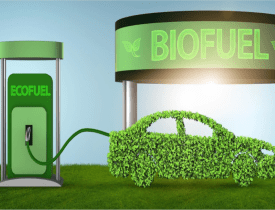
Description
Course Name: Certificate in Bio-CNG (Green Fuel)
Course Id: CBCNG/Q1001.
Eligibility: 10th Grade(High School) or Equivalent.
Duration: Two Month.
Objective: The course aims to provide learners with comprehensive knowledge of Bio-CNG production and its applications as a sustainable green fuel. It covers the principles of anaerobic digestion, feedstock selection, gas production, purification, compression, storage, and distribution.
🎓 How to Enroll and Get Certified in Your Chosen Course:
✔️ Step 1: Choose the course you wish to get certified in.
✔️ Step 2: Click on the “Enroll Now” button.
✔️ Step 3: Proceed with the enrollment process.
✔️ Step 4: Enter your billing details and continue to course fee payment.
✔️ Step 5: You will be redirected to the payment gateway. Pay the course and exam fee using one of the following methods:
Debit/Credit Card, Wallet, Paytm, Net Banking, UPI, or Google Pay.
✔️ Step 6: After successful payment, you will receive your study material login ID and password via email within 48 hours of fee payment.
✔️ Step 7: Once you complete the course, take the online examination.
✔️ Step 8: Upon passing the examination, you will receive:
• A soft copy (scanned) of your certificate via email within 7 days of examination.
• A hard copy (original with official seal and signature) sent to your address within 45 day of declaration of result.
✔️ Step 9: After certification, you will be offered job opportunities aligned with your area of interest.
Online Examination Detail:
Duration- 60 minutes.
No. of Questions- 30. (Multiple Choice Questions).
Maximum Marks- 100, Passing Marks- 40%.
There is no negative marking in this module.
| Marking System: | ||||||
| S.No. | No. of Questions | Marks Each Question | Total Marks | |||
| 1 | 10 | 5 | 50 | |||
| 2 | 5 | 4 | 20 | |||
| 3 | 5 | 3 | 15 | |||
| 4 | 5 | 2 | 10 | |||
| 5 | 5 | 1 | 5 | |||
| 30 | 100 | |||||
| How Students will be Graded: | ||||||
| S.No. | Marks | Grade | ||||
| 1 | 91-100 | O (Outstanding) | ||||
| 2 | 81-90 | A+ (Excellent) | ||||
| 3 | 71-80 | A (Very Good) | ||||
| 4 | 61-70 | B (Good) | ||||
| 5 | 51-60 | C (Average) | ||||
| 6 | 40-50 | P (Pass) | ||||
| 7 | 0-40 | F (Fail) | ||||
🌟 Key Benefits of Certification- Earning a professional certification not only validates your skills but also enhances your employability. Here are the major benefits you gain:
✅ Practical, Job-Ready Skills – Our certifications are designed to equip you with real-world, hands-on skills that match current industry demands — helping you become employment-ready from day one.
📜 Lifetime Validity – Your certification is valid for a lifetime — no renewals or expirations. It serves as a permanent proof of your skills and training.
🔍 Lifetime Certificate Verification – Employers and institutions can verify your certification anytime through a secure and reliable verification system — adding credibility to your qualifications.
🎯 Industry-Aligned Certification –All certifications are developed in consultation with industry experts to ensure that what you learn is current, relevant, and aligned with market needs.
💼 Preferred by Employers – Candidates from ISO-certified institutes are often prioritized by recruiters due to their exposure to standardized, high-quality training.
🤝 Free Job Assistance Based on Your Career Interests – Receive personalized job assistance and career guidance in your preferred domain, helping you land the right role faster.
Syllabus
Introduction to Bio-CNG and Green Fuels: Definition and Importance of Bio-CNG, Difference Between CNG and Bio-CNG, Sources of Raw Materials for Bio-CNG Production, Advantages of Bio-CNG Over Fossil Fuels, Environmental Benefits and Sustainability, Government Policies and Incentives for Bio-CNG, Global Market Trends in Green Fuels, Case Studies on Successful Bio-CNG Projects.
Feedstock and Raw Material Management: Types of Organic Waste for Bio-CNG Production, Agricultural Waste Utilization, Animal Manure and Food Waste Processing, Industrial and Municipal Waste Management, Pre-Treatment and Processing of Feedstock, Waste Collection and Segregation Strategies, Impact of Feedstock Quality on Bio-CNG Yield, Case Studies on Feedstock Optimization.
Anaerobic Digestion and Biogas Production: Principles of Anaerobic Digestion, Microbial Processes in Biogas Generation, Factors Affecting Biogas Production, Types of Digesters Used in Bio-CNG Plants, Process Control and Monitoring in Anaerobic Digestion, Enhancement Techniques for Biogas Yield, Handling and Storage of Biogas, Case Studies on Efficient Anaerobic Digestion.
Bio-CNG Upgradation and Purification: Need for Biogas Purification, Techniques for Removing CO₂, H₂S, and Moisture, Membrane Separation and Water Scrubbing Methods, Chemical and Pressure Swing Adsorption Techniques, Compression and Storage of Bio-CNG, Quality Standards and Specifications for Bio-CNG, Safety Measures in Upgradation and Storage, Case Studies on Bio-CNG Purification Technologies.
Bio-CNG Plant Design and Infrastructure: Components of a Bio-CNG Plant, Site Selection and Layout Planning, Construction and Engineering Considerations, Piping and Gas Distribution Systems, Automation and Control Systems in Bio-CNG Plants, Waste Heat Recovery and Energy Optimization, Cost Estimation and Financial Planning, Case Studies on Bio-CNG Plant Designs.
Utilization and Applications of Bio-CNG: Use of Bio-CNG in Transportation Sector, Industrial and Commercial Applications, Role of Bio-CNG in Power Generation, Bio-CNG as a Cooking and Heating Fuel, Storage and Distribution Challenges, Government Policies on Bio-CNG Utilization, Economic Benefits of Bio-CNG Adoption, Case Studies on Large-Scale Bio-CNG Applications.
After successful completion of the Certificate in Bio-CNG (Green Fuel) program, graduates gain technical and entrepreneurial skills related to the production, purification, compression, and utilization of Bio-CNG (Compressed Natural Gas derived from organic waste). With the rise in demand for renewable and sustainable energy sources, the Bio-CNG sector in India offers strong career and business opportunities aligned with the government’s focus on green energy, waste management, and circular economy.
✅ Career Options After Certificate in Bio-CNG (Green Fuel) Program – India
| Job Role | Job Description | Average Salary Range (per annum) |
|---|---|---|
| Plant Operator (Bio-CNG) | Operates and monitors biogas generation and upgrading equipment in Bio-CNG plants. | ₹2.0 – ₹4.0 LPA |
| Process Technician | Handles mechanical and chemical processes involved in organic waste digestion and methane recovery. | ₹2.5 – ₹4.5 LPA |
| Maintenance Technician | Conducts regular maintenance of digesters, scrubbers, compressors, and pipelines. | ₹2.0 – ₹4.0 LPA |
| Quality Control Analyst | Tests methane content, purity, and calorific value of the Bio-CNG produced. | ₹3.0 – ₹5.0 LPA |
| Environment & Safety Officer | Ensures compliance with environmental regulations and safety protocols. | ₹3.5 – ₹6.0 LPA |
| Project Executive (Green Energy) | Works with renewable energy firms to coordinate Bio-CNG plant operations and expansion. | ₹4.0 – ₹7.0 LPA |
| Sales Executive (Bio-Fuel Sector) | Promotes and sells Bio-CNG to industrial, automotive, or public transport sectors. | ₹2.5 – ₹5.0 LPA + incentives |
| Entrepreneur – Bio-CNG Plant Owner | Sets up and runs a Bio-CNG unit processing organic/agri/municipal waste for fuel generation. | ₹6 – ₹25+ LPA (profit-dependent) |
🏭 Top Employers & Sectors
-
Renewable energy companies (e.g., Indian Oil, HPCL, Adani Gas, EverEnviro)
-
Municipal solid waste (MSW) management agencies
-
Industrial Bio-CNG plants & green fuel suppliers
-
Transport companies and commercial fuel distributors
-
Government-backed waste-to-energy projects (e.g., SATAT scheme)
📈 Career Growth Path
-
Operator → Supervisor → Plant Manager → Regional Head
-
QC Analyst → Quality Manager → Compliance Director
-
Technician → Engineer → Technical Project Manager
-
Sales Executive → Area Manager → Business Development Manager
💼 Entrepreneurial Opportunities
Graduates can:
-
Start a Bio-CNG production unit from cow dung, food/agri waste, or municipal waste
-
Collaborate with transport companies and city gas networks for fuel supply
-
Set up decentralized Bio-CNG units for rural and industrial applications
-
Apply for funding under government schemes like SATAT (Sustainable Alternative Towards Affordable Transportation)
💰 Earnings Potential for Entrepreneurs:
-
Small-scale plant: ₹40,000 – ₹1 lakh/month profit
-
Medium/large-scale unit: ₹8 – ₹30+ LPA depending on input source, scale, and buyer contracts





Reviews
There are no reviews yet.