Description
Certification Name: Certificate in E-commerce Web Designer
Course Id: CEWD/Q0001.
Eligibility: 10+2 (higher Secondary) or Equivalent.
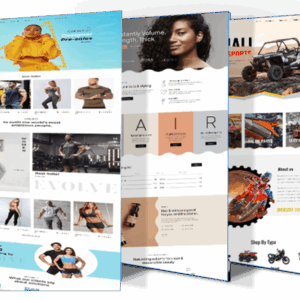
Objective: The Certified E-commerce Web Designer course is designed to equip professionals with the technical and design skills required to create engaging, user-friendly, and conversion-optimized e-commerce websites. The course covers e-commerce platform selection (such as Shopify, WooCommerce, Magento), responsive web design, product page layout, shopping cart and checkout design, UX/UI principles, payment gateway integration, and security best practices (SSL, data protection).
Duration: Three Month.
 How to Enroll and Get Certified in Your Chosen Course:
 Step 1: Choose the course you wish to get certified in.
Step 2: Click on the “Enroll Now” button.
Step 3: Proceed with the enrollment process.
Step 4: Enter your billing details and continue to course fee payment.
Step 5: You will be redirected to the payment gateway. Pay the course and exam fee using one of the following methods:
Debit/Credit Card, Wallet, Paytm, Net Banking, UPI, or Google Pay.
Step 6: After successful payment, you will receive your study material login ID and password via email within 48 hours of fee payment.
Step 7: Once you complete the course, take the online examination.
Step 8: Upon passing the examination, you will receive:
• A soft copy (scanned) of your certificate via email within 7 days of examination.
• A hard copy (original with official seal and signature) sent to your address within 45 day of declaration of result.
Step 9: After certification, you will be offered job opportunities aligned with your area of interest.
Online Examination Detail:
Duration- 60 minutes.
No. of Questions- 30. (Multiple Choice Questions).
Maximum Marks- 100, Passing Marks- 40%.
There is no negative marking in this module.
| Marking System: | ||||||
| S.No. | No. of Questions | Marks Each Question | Total Marks | |||
| 1 | 10 | 5 | 50 | |||
| 2 | 5 | 4 | 20 | |||
| 3 | 5 | 3 | 15 | |||
| 4 | 5 | 2 | 10 | |||
| 5 | 5 | 1 | 5 | |||
| 30 | 100 | |||||
| How Students will be Graded: | ||||||
| S.No. | Marks | Grade | ||||
| 1 | 91-100 | O (Outstanding) | ||||
| 2 | 81-90 | A+ (Excellent) | ||||
| 3 | 71-80 | A (Very Good) | ||||
| 4 | 61-70 | B (Good) | ||||
| 5 | 51-60 | C (Average) | ||||
| 6 | 40-50 | P (Pass) | ||||
| 7 | 0-40 | F (Fail) | ||||
 Key Benefits of Certification- Earning a professional certification not only validates your skills but also enhances your employability. Here are the major benefits you gain:
 Practical, Job-Ready Skills – Our certifications are designed to equip you with real-world, hands-on skills that match current industry demands — helping you become employment-ready from day one.
 Lifetime Validity – Your certification is valid for a lifetime — no renewals or expirations. It serves as a permanent proof of your skills and training.
 Lifetime Certificate Verification – Employers and institutions can verify your certification anytime through a secure and reliable verification system — adding credibility to your qualifications.
 Industry-Aligned Certification –All certifications are developed in consultation with industry experts to ensure that what you learn is current, relevant, and aligned with market needs.
 Preferred by Employers – Candidates from ISO-certified institutes are often prioritized by recruiters due to their exposure to standardized, high-quality training.
 Free Job Assistance Based on Your Career Interests – Receive personalized job assistance and career guidance in your preferred domain, helping you land the right role faster.
Assessment Modules:
Module 1: Introduction to E-commerce and Web Design: Overview of E-commerce Business Models (B2C, B2B, C2C), Role and Responsibilities of an E-commerce Web Designer, Key Components of an E-commerce Website (Homepage, Product Pages, Cart, Checkout), Understanding User Behavior in Online Shopping, Examples of Successful E-commerce Websites, Trends and Technologies in E-commerce Web Design.
Module 2: UI/UX Principles for E-commerce: User Experience (UX) Strategy for Online Stores, Visual Hierarchy and Navigation Design, Mobile-First and Responsive Design Best Practices, Designing Effective CTAs, Filters, and Search Functions, Cart and Checkout Experience Optimization, Wireframing and Prototyping E-commerce Interfaces.
Module 3: HTML, CSS, and Frontend Development for E-commerce: Building Responsive Layouts with HTML and CSS, Styling Product Grids, Buttons, and Navigation Menus, Interactive Elements with JavaScript (Sliders, Pop-ups, Quantity Selectors), Product Image Galleries and Zoom Features, Cross-Browser and Cross-Device Compatibility, Performance Optimization for Faster Loading.
Module 4: CMS and E-commerce Platforms: Overview of E-commerce Platforms (Shopify, WooCommerce, Magento, BigCommerce), Theme Customization and Template Editing, Setting Up Product Pages, Categories, and Tags, Integrating Payment Gateways and Shipping Modules, Plugin/Extension Management, Selecting the Right Platform for Different Business Needs.
Module 5: SEO, Security, and Analytics in E-commerce: SEO Best Practices for Product Listings and URLs, Structured Data and Schema Markup for Products, Ensuring Website Security (SSL, Payment Security, Data Protection), Setting Up Google Analytics and E-commerce Tracking, Monitoring Conversion Rates and Customer Behavior, GDPR Compliance and Privacy Policies.
Module 6: E-commerce Launch and Maintenance: Pre-Launch Checklist and Testing (Broken Links, Mobile Test, Payments), Handling Website Downtime and Error Pages, Updating Content, Products, and Promotional Banners, Running A/B Tests for Design Improvements, Customer Feedback Integration, Freelancing and Career Paths in E-commerce Web Design.
🎓 Certificate in E-commerce Web Designer – Career Overview
After completing this certification, you can build a career in IT companies, digital marketing agencies, e-commerce brands, startups, web development firms, and freelance web design projects across India. E-commerce web designers create visually appealing, user-friendly, and conversion-focused online stores for businesses selling products or services online.
🔝 Career Options & Salary Range (India)
-
E-commerce Web Designer – ₹3,50,000 to ₹9,00,000 per year
-
UI/UX Designer (E-commerce) – ₹4,00,000 to ₹12,00,000 per year
-
Shopify / WooCommerce Designer – ₹4,00,000 to ₹10,00,000 per year
-
Freelance E-commerce Website Designer – ₹5,00,000 to ₹20,00,000+ per year
-
Senior Web Designer / E-commerce Manager – ₹7,00,000 to ₹25,00,000+ per year
(Income varies depending on technical skills, experience, client base, and city.)
🎯 Key Responsibilities
-
Designing responsive and user-friendly e-commerce websites
-
Creating product pages, landing pages, and checkout flows
-
Ensuring mobile compatibility and fast website performance
-
Integrating payment gateways, shopping carts, and inventory systems
-
Optimizing website layout for higher conversions and sales
📈 Career Growth Path
Junior Web Designer → E-commerce Web Designer → Senior UI/UX Designer → E-commerce Project Manager → Digital Business Consultant
Experienced professionals can work with major online brands, digital agencies, SaaS companies, or launch their own web design agency.
🧠 Skills That Increase Earning Potential
✔ Knowledge of HTML, CSS, JavaScript
✔ Familiarity with Shopify, WooCommerce, Magento, or similar platforms
✔ Understanding of UI/UX design principles
✔ Basic SEO and conversion rate optimization knowledge
✔ Client communication and project management skills