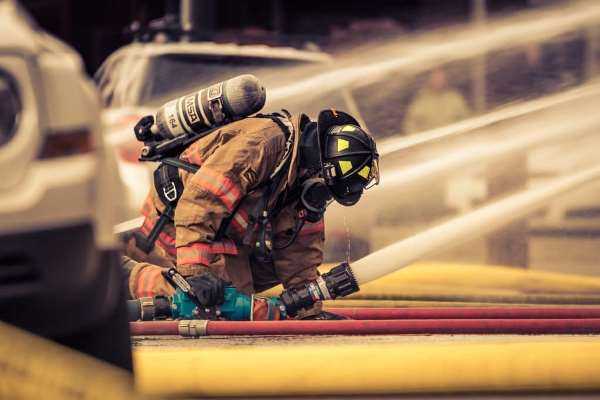
Description
Certification Name: Certificate in Fire Risk Assessor
Course Id: CFRA/Q0001.
Eligibility: Graduation or Equivalent.
Objective: The Certified Fire Risk Assessor course is designed to equip participants with the skills and knowledge necessary to conduct thorough fire risk assessments across various environments, including commercial, industrial, residential, and institutional settings. The course covers fire behavior fundamentals, identification of ignition sources, assessment of fire loads, evaluation of escape routes, detection and alarm systems, fire suppression measures, and human behavior in fire situations.
Duration: Three Month.
 How to Enroll and Get Certified in Your Chosen Course:
 Step 1: Choose the course you wish to get certified in.
Step 2: Click on the “Enroll Now” button.
Step 3: Proceed with the enrollment process.
Step 4: Enter your billing details and continue to course fee payment.
Step 5: You will be redirected to the payment gateway. Pay the course and exam fee using one of the following methods:
Debit/Credit Card, Wallet, Paytm, Net Banking, UPI, or Google Pay.
Step 6: After successful payment, you will receive your study material login ID and password via email within 48 hours of fee payment.
Step 7: Once you complete the course, take the online examination.
Step 8: Upon passing the examination, you will receive:
• A soft copy (scanned) of your certificate via email within 7 days of examination.
• A hard copy (original with official seal and signature) sent to your address within 45 day of declaration of result.
Step 9: After certification, you will be offered job opportunities aligned with your area of interest.
Online Examination Detail:
Duration- 60 minutes.
No. of Questions- 30. (Multiple Choice Questions).
Maximum Marks- 100, Passing Marks- 40%.
There is no negative marking in this module.
| Marking System: | ||||||
| S.No. | No. of Questions | Marks Each Question | Total Marks | |||
| 1 | 10 | 5 | 50 | |||
| 2 | 5 | 4 | 20 | |||
| 3 | 5 | 3 | 15 | |||
| 4 | 5 | 2 | 10 | |||
| 5 | 5 | 1 | 5 | |||
| 30 | 100 | |||||
| How Students will be Graded: | ||||||
| S.No. | Marks | Grade | ||||
| 1 | 91-100 | O (Outstanding) | ||||
| 2 | 81-90 | A+ (Excellent) | ||||
| 3 | 71-80 | A (Very Good) | ||||
| 4 | 61-70 | B (Good) | ||||
| 5 | 51-60 | C (Average) | ||||
| 6 | 40-50 | P (Pass) | ||||
| 7 | 0-40 | F (Fail) | ||||
 Key Benefits of Certification- Earning a professional certification not only validates your skills but also enhances your employability. Here are the major benefits you gain:
 Practical, Job-Ready Skills – Our certifications are designed to equip you with real-world, hands-on skills that match current industry demands — helping you become employment-ready from day one.
 Lifetime Validity – Your certification is valid for a lifetime — no renewals or expirations. It serves as a permanent proof of your skills and training.
 Lifetime Certificate Verification – Employers and institutions can verify your certification anytime through a secure and reliable verification system — adding credibility to your qualifications.
 Industry-Aligned Certification –All certifications are developed in consultation with industry experts to ensure that what you learn is current, relevant, and aligned with market needs.
 Preferred by Employers – Candidates from ISO-certified institutes are often prioritized by recruiters due to their exposure to standardized, high-quality training.
 Free Job Assistance Based on Your Career Interests – Receive personalized job assistance and career guidance in your preferred domain, helping you land the right role faster.
Assessment Modules:
Module 1: Fundamentals of Fire Science and Fire Risk Assessment: Principles of fire science (fire triangle, combustion process), Types and behavior of fire in different environments, Classification of fires and fire extinguishing methods, Importance of fire risk assessment in safety management, Roles and responsibilities of a Fire Risk Assessor, Overview of fire safety legislation and standards (NBC, NFPA, IS).
Module 2: Fire Hazard Identification and Risk Evaluation: Identifying common fire hazards in buildings, industries, and public spaces, Sources of ignition, fuel, and oxygen enrichment, Assessing vulnerability based on occupancy, materials, and processes, Evaluating consequences and likelihood of fire occurrence, Fire load calculation and risk classification, Recording and communicating findings effectively.
Module 3: Fire Prevention, Control Measures, and Risk Reduction: Active and passive fire protection systems, Means of escape and emergency exit design, Fire detection and alarm systems (types, placement, testing), Fixed firefighting installations (sprinklers, hydrants, suppression systems), Housekeeping and maintenance practices to reduce fire risk, Implementing and reviewing fire risk control measures.
Module 4: Fire Safety Inspection and Compliance Audit: Conducting fire safety inspections using checklists, Verifying compliance with national building codes and fire norms, Inspection of fire doors, staircases, extinguishers, and emergency lighting, Maintenance and testing records of fire systems and equipment, Identifying non-compliance and recommending corrective actions, Preparing and submitting fire safety audit reports.
Module 5: Emergency Preparedness and Fire Response Planning: Developing fire emergency plans and evacuation procedures, Fire drills, mock exercises, and training requirements, Roles and duties of fire wardens and emergency response teams, Communication systems and control room coordination, Post-fire response, salvage, and investigation protocols, Integration of fire risk assessment into emergency management plans.
Module 6: Documentation, Reporting, and Continuous Improvement: Fire risk assessment documentation formats and legal requirements, Maintaining audit trails and compliance logs, Communicating risks and mitigation plans to stakeholders, Reviewing and updating assessments periodically, Tracking corrective actions and safety improvements, Case studies on fire incidents and risk mitigation success stories.
Career Opportunities After
Certificate in Fire Risk Assessor
The Certificate in Fire Risk Assessor prepares professionals to identify, evaluate, and mitigate fire hazards in residential, commercial, industrial, and infrastructure environments.
The program develops expertise in fire risk assessment methodologies, fire prevention strategies, emergency planning, fire protection systems evaluation, regulatory compliance, and safety audit documentation.
Graduates are in high demand across industries where fire safety compliance and risk management are mandatory.
Key Job Roles & Salary Outlook (India)
1. Fire Risk Assessor
Role: Conducts fire risk assessments, identifies hazards, evaluates fire protection systems, and recommends mitigation measures.
Salary: ₹4 – 9 LPA | ₹9 – 16 LPA (Experienced)
2. Fire & Safety Officer
Role: Oversees fire prevention measures, emergency preparedness, and compliance with fire safety regulations.
Salary: ₹4 – 10 LPA | ₹10 – 18 LPA
3. Fire Safety Auditor
Role: Performs fire safety audits, inspects fire protection systems, and ensures regulatory compliance.
Salary: ₹5 – 12 LPA | ₹12 – 22+ LPA
4. Fire Protection Engineer
Role: Designs and evaluates fire detection, alarm, and suppression systems.
Salary: ₹6 – 14 LPA | ₹14 – 25+ LPA
5. Safety & Compliance Consultant (Fire Safety)
Role: Advises organizations on fire risk mitigation, safety planning, and statutory compliance.
Salary: ₹6 – 15 LPA | ₹15 – 30+ LPA
Top Employment Sectors
-
Commercial & High-Rise Buildings
-
Manufacturing & Industrial Plants
-
Oil & Gas Industry
-
Airports, Railways & Metro Projects
-
Hospitals & Healthcare Facilities
-
Shopping Malls & Multiplexes
-
Infrastructure & EPC Companies
-
Fire Safety & Engineering Consultancy Firms
-
Government & Municipal Authorities
Skills That Accelerate Career Growth
-
Fire Hazard Identification
-
Fire Risk Assessment Techniques
-
Fire Protection System Evaluation
-
Emergency Evacuation Planning
-
Fire Safety Regulations & Building Codes
-
Safety Audit & Compliance Documentation
-
Incident Investigation & Root Cause Analysis
-
Fire Drill Planning & Safety Training
Career Growth Path
Fire Safety Technician
→ Fire & Safety Officer
→ Fire Risk Assessor
→ Senior Fire Safety Engineer
→ Fire & Life Safety Manager
→ Director – Fire Safety & Risk Management
Entrepreneurial Opportunities
-
Fire Risk Assessment Consultancy
-
Fire Safety Audit & Certification Services
-
Fire Protection System Advisory
-
Emergency Preparedness & Training Services
-
Compliance Documentation & Regulatory Consulting
Earning Potential in India
-
Entry Level: ₹3 – 6 LPA
-
Mid Level: ₹6 – 14 LPA
-
Senior Level: ₹14 – 30+ LPA
-
Independent Fire Safety Consultant: ₹15 – 45+ LPA depending on project scale and clientele