
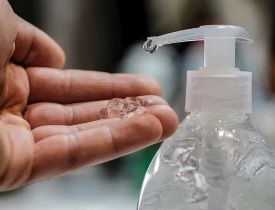
Description
Course Name: Certificate in Hand Sanitizer Manufacturing Technology
Course Id: CHSMT/Q1001.
Eligibility: 10th Grade(High School) or Equivalent.
Duration: One Month.
Objective: The objective of this course is to equip learners with the technical knowledge, production skills, and quality control measures required to manufacture safe and effective hand sanitizers. The course covers formulation, raw material selection, production processes, packaging, regulatory compliance, and business aspects to help participants establish or manage a hand sanitizer manufacturing unit.
🎓 How to Enroll and Get Certified in Your Chosen Course:
✔️ Step 1: Choose the course you wish to get certified in.
✔️ Step 2: Click on the “Enroll Now” button.
✔️ Step 3: Proceed with the enrollment process.
✔️ Step 4: Enter your billing details and continue to course fee payment.
✔️ Step 5: You will be redirected to the payment gateway. Pay the course and exam fee using one of the following methods:
Debit/Credit Card, Wallet, Paytm, Net Banking, UPI, or Google Pay.
✔️ Step 6: After successful payment, you will receive your study material login ID and password via email within 48 hours of fee payment.
✔️ Step 7: Once you complete the course, take the online examination.
✔️ Step 8: Upon passing the examination, you will receive:
• A soft copy (scanned) of your certificate via email within 7 days of examination.
• A hard copy (original with official seal and signature) sent to your address within 45 day of declaration of result.
✔️ Step 9: After certification, you will be offered job opportunities aligned with your area of interest.
Online Examination Detail:
Duration- 60 minutes.
No. of Questions- 30. (Multiple Choice Questions).
Maximum Marks- 100, Passing Marks- 40%.
There is no negative marking in this module.
| Marking System: | ||||||
| S.No. | No. of Questions | Marks Each Question | Total Marks | |||
| 1 | 10 | 5 | 50 | |||
| 2 | 5 | 4 | 20 | |||
| 3 | 5 | 3 | 15 | |||
| 4 | 5 | 2 | 10 | |||
| 5 | 5 | 1 | 5 | |||
| 30 | 100 | |||||
| How Students will be Graded: | ||||||
| S.No. | Marks | Grade | ||||
| 1 | 91-100 | O (Outstanding) | ||||
| 2 | 81-90 | A+ (Excellent) | ||||
| 3 | 71-80 | A (Very Good) | ||||
| 4 | 61-70 | B (Good) | ||||
| 5 | 51-60 | C (Average) | ||||
| 6 | 40-50 | P (Pass) | ||||
| 7 | 0-40 | F (Fail) | ||||
🌟 Key Benefits of Certification- Earning a professional certification not only validates your skills but also enhances your employability. Here are the major benefits you gain:
✅ Practical, Job-Ready Skills – Our certifications are designed to equip you with real-world, hands-on skills that match current industry demands — helping you become employment-ready from day one.
📜 Lifetime Validity – Your certification is valid for a lifetime — no renewals or expirations. It serves as a permanent proof of your skills and training.
🔍 Lifetime Certificate Verification – Employers and institutions can verify your certification anytime through a secure and reliable verification system — adding credibility to your qualifications.
🎯 Industry-Aligned Certification –All certifications are developed in consultation with industry experts to ensure that what you learn is current, relevant, and aligned with market needs.
💼 Preferred by Employers – Candidates from ISO-certified institutes are often prioritized by recruiters due to their exposure to standardized, high-quality training.
🤝 Free Job Assistance Based on Your Career Interests – Receive personalized job assistance and career guidance in your preferred domain, helping you land the right role faster.
Syllabus:
Introduction to Sanitizer Manufacturing: History and evolution of sanitizers, Importance of hand hygiene, Overview of sanitizer market, Types of hand sanitizers, Role of sanitizers in infection control, WHO and FDA guidelines, Global demand and trends, Role in healthcare and public safety, COVID-19 and sanitizer use, Future scope in the industry.
Ingredients and Raw Materials: Types of alcohol used (ethanol, isopropyl), Role of glycerin, Use of hydrogen peroxide, Role of distilled water, Essential oils and fragrances, Thickening agents (carbomers), Preservatives used, Emollients and moisturizers, Skin-friendly additives, Sources and quality of raw materials.
Formulation Techniques: WHO-recommended formulation, Gel-based sanitizer formulation, Liquid-based sanitizer formulation, Spray formulation, Foam sanitizer basics, Role of pH balance, Stability and consistency adjustment, Color and scent addition, Child-safe formulations, Allergen-free and organic options.
Equipment and Machinery: Mixing and blending equipment, Homogenizers and stirrers, Filling and packaging machines, Labeling machines, Storage containers and tanks, Safety equipment in manufacturing, Cleaning and sterilization of equipment, Automation in sanitizer production, Manual vs. automated production, Maintenance of machinery.
Quality Control and Testing: Testing alcohol concentration, Microbial efficacy testing, Viscosity and pH testing, Skin irritation testing, Shelf-life and stability tests, Compliance with pharmacopoeia standards, Label verification and content analysis, Sample batch testing procedures, Documentation and lab records, Role of third-party testing.
Packaging and Labeling: Types of packaging containers, Packaging for gels vs. liquids, Eco-friendly packaging options, Importance of tamper-proof packaging, Labeling regulations (FDA/WHO), Label design and branding, Child-resistant packaging, Storage and transportation needs, Barcode and batch number printing, Refill pack design.
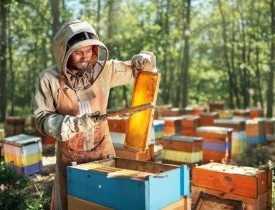
After successful completion of the Certificate in Apiculture (Honey Bee Keeping) program, graduates gain practical and theoretical knowledge on bee biology, hive management, honey extraction, bee products processing, disease control, and marketing. Given the increasing awareness of natural products and pollination benefits in agriculture, apiculture offers promising career and entrepreneurial avenues in India.
✅ Career Options After Certificate in Apiculture (Honey Bee Keeping) – India
| Job Role | Job Description | Average Salary Range (per annum) |
|---|---|---|
| Apiary Worker / Assistant | Manages bee colonies, assists in hive maintenance, feeding, and honey extraction. | ₹1.8 – ₹3.0 LPA |
| Beekeeper / Apiarist | Independently manages apiaries, maintains bee health, and harvests honey and other bee products. | ₹2.5 – ₹5.0 LPA |
| Quality Control Technician | Tests honey for purity, moisture, and contaminants to ensure product standards. | ₹2.5 – ₹4.5 LPA |
| Sales & Marketing Executive | Markets and sells honey, beeswax, propolis, pollen, royal jelly to wholesalers, retailers, or export firms. | ₹2.5 – ₹5.5 LPA + incentives |
| Extension Officer / Trainer | Provides training and guidance to farmers and beekeepers on best practices and new techniques. | ₹3.0 – ₹6.0 LPA |
| Entrepreneur – Apiary Owner | Starts a commercial apiary producing honey and bee products for local and export markets. | ₹6 – ₹20+ LPA (profit-dependent) |
| Pollination Service Provider | Offers pollination services to agricultural farms to improve crop yields. | ₹3 – ₹8 LPA |
| Honey Processing Unit Operator | Runs or manages honey extraction, filtration, packaging, and branding units. | ₹3.0 – ₹6.0 LPA |
🐝 Key Industry Sectors
-
Honey and bee product processing units
-
Organic and natural product companies
-
Agricultural farms needing pollination services
-
Export firms dealing in honey and bee products
-
Government agricultural extension programs
-
Herbal and Ayurvedic product manufacturers
📈 Career Growth Path
-
Apiary Worker → Beekeeper → Apiary Manager
-
Quality Control → Production Manager → Export Coordinator
-
Trainer → Extension Officer → Agricultural Consultant
-
Entrepreneur → Brand Owner → Exporter
💼 Entrepreneurial Opportunities
Graduates can:
-
Start small-scale or commercial apiaries producing honey, beeswax, royal jelly, pollen, propolis
-
Launch organic honey brands for local or online markets
-
Offer pollination services to fruit orchards, vegetable farms, and plantations
-
Set up honey processing and packaging units
💰 Earnings Potential for Entrepreneurs:
-
Small apiary: ₹25,000 – ₹80,000/month profit
-
Medium commercial apiary: ₹8 – ₹20+ LPA depending on scale and branding



























































































Reviews
There are no reviews yet.