
Description
Course Name: Certificate in Organic Waste Management
Course Id: COWM/Q1001.
Eligibility: 10th Grade(High School) or Equivalent.
Duration: Two Month.
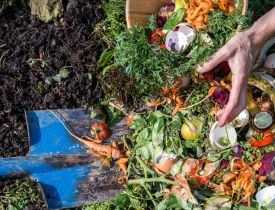
Objective: The objective of this course is to equip learners with the knowledge and skills necessary to efficiently manage organic waste through sustainable and environmentally friendly methods. The program covers principles of waste segregation, composting techniques, bio-digestion, recycling, and waste-to-energy processes, along with regulatory guidelines and business opportunities in organic waste management.
🎓 How to Enroll and Get Certified in Your Chosen Course:
✔️ Step 1: Choose the course you wish to get certified in.
✔️ Step 2: Click on the “Enroll Now” button.
✔️ Step 3: Proceed with the enrollment process.
✔️ Step 4: Enter your billing details and continue to course fee payment.
✔️ Step 5: You will be redirected to the payment gateway. Pay the course and exam fee using one of the following methods:
Debit/Credit Card, Wallet, Paytm, Net Banking, UPI, or Google Pay.
✔️ Step 6: After successful payment, you will receive your study material login ID and password via email within 48 hours of fee payment.
✔️ Step 7: Once you complete the course, take the online examination.
✔️ Step 8: Upon passing the examination, you will receive:
• A soft copy (scanned) of your certificate via email within 7 days of examination.
• A hard copy (original with official seal and signature) sent to your address within 45 day of declaration of result.
✔️ Step 9: After certification, you will be offered job opportunities aligned with your area of interest.
Online Examination Detail:
Duration- 60 minutes.
No. of Questions- 30. (Multiple Choice Questions).
Maximum Marks- 100, Passing Marks- 40%.
There is no negative marking in this module.
| Marking System: | ||||||
| S.No. | No. of Questions | Marks Each Question | Total Marks | |||
| 1 | 10 | 5 | 50 | |||
| 2 | 5 | 4 | 20 | |||
| 3 | 5 | 3 | 15 | |||
| 4 | 5 | 2 | 10 | |||
| 5 | 5 | 1 | 5 | |||
| 30 | 100 | |||||
| How Students will be Graded: | ||||||
| S.No. | Marks | Grade | ||||
| 1 | 91-100 | O (Outstanding) | ||||
| 2 | 81-90 | A+ (Excellent) | ||||
| 3 | 71-80 | A (Very Good) | ||||
| 4 | 61-70 | B (Good) | ||||
| 5 | 51-60 | C (Average) | ||||
| 6 | 40-50 | P (Pass) | ||||
| 7 | 0-40 | F (Fail) | ||||
🌟 Key Benefits of Certification- Earning a professional certification not only validates your skills but also enhances your employability. Here are the major benefits you gain:
✅ Practical, Job-Ready Skills – Our certifications are designed to equip you with real-world, hands-on skills that match current industry demands — helping you become employment-ready from day one.
📜 Lifetime Validity – Your certification is valid for a lifetime — no renewals or expirations. It serves as a permanent proof of your skills and training.
🔍 Lifetime Certificate Verification – Employers and institutions can verify your certification anytime through a secure and reliable verification system — adding credibility to your qualifications.
🎯 Industry-Aligned Certification –All certifications are developed in consultation with industry experts to ensure that what you learn is current, relevant, and aligned with market needs.
💼 Preferred by Employers – Candidates from ISO-certified institutes are often prioritized by recruiters due to their exposure to standardized, high-quality training.
🤝 Free Job Assistance Based on Your Career Interests – Receive personalized job assistance and career guidance in your preferred domain, helping you land the right role faster.
Syllabus
Introduction to Organic Waste Management: Definition and classification of organic waste, Sources of organic waste (household, agricultural, industrial), Importance of managing organic waste, Environmental impact of unmanaged organic waste, Key principles of sustainable waste management, Overview of global and national waste management practices, Role of local authorities and regulations, Waste hierarchy and 3Rs (Reduce, Reuse, Recycle), Scope and career opportunities in organic waste management, Challenges and future prospects in waste handling.
Composition and Characterization of Organic Waste: Types of biodegradable organic waste, Physical and chemical properties of organic waste, Sampling and analysis techniques, Moisture content and calorific value, Nutrient content analysis (C:N ratio, nitrogen, phosphorus), Methods for identifying recyclable components, Toxicity and pathogen assessment, Seasonal variation in waste generation and composition, Tools and equipment for waste characterization, Importance of waste auditing in planning treatment.
Collection, Segregation and Transportation of Organic Waste: Best practices for waste segregation at source, Color coding and containerization of organic waste, Role of municipalities and private players in collection, Collection systems (door-to-door, community bins), Transportation methods and vehicle selection, GPS and tracking in waste transportation, Occupational safety for waste workers, Minimizing waste contamination during transit, Logistics optimization in waste movement, Community involvement in segregation and collection.
Composting Techniques and Technologies: Introduction to composting and its benefits, Aerobic and anaerobic composting methods, Vermicomposting using earthworms, In-vessel and windrow composting systems, Temperature and moisture control in composting, Equipment and machinery used in composting, Monitoring composting parameters (pH, temperature, odor), Quality testing of compost (stability, maturity), Compost application and market potential, Challenges in large-scale composting.
Anaerobic Digestion and Biogas Technology: Principles of anaerobic digestion, Stages of biogas production (hydrolysis, acidogenesis, methanogenesis), Feedstock preparation and slurry management, Biogas plant design and components, Operational parameters (retention time, temperature), Upgradation and storage of biogas, Utilization of biogas (cooking, power generation), Digestate handling and use as bio-fertilizer, Safety and maintenance of biogas systems, Government schemes and incentives for biogas units.
Waste to Energy and Other Conversion Technologies: Introduction to waste-to-energy (WTE) concepts, Thermal technologies (incineration, pyrolysis, gasification), Comparison of biological and thermal conversion, RDF (Refuse Derived Fuel) from organic waste, Emerging technologies in organic waste processing, Integration of solar and biomass systems, Energy recovery and efficiency analysis, Environmental impact and emission control, Economic viability of WTE projects, Case studies of successful WTE plants.
After successful completion of the Certificate in Organic Waste Management program, graduates gain practical knowledge and skills related to the collection, segregation, processing, and recycling of organic waste into useful products like compost and biogas. This sector is increasingly important in India due to growing environmental concerns, government initiatives, and sustainable urban development programs.
✅ Career Options After Certificate in Organic Waste Management (India)
| Job Role | Job Description | Average Salary Range (per annum) |
|---|---|---|
| Waste Collection Supervisor | Oversees collection and segregation of organic waste from households, businesses, and industries. | ₹1.8 – ₹3.5 LPA |
| Composting Technician | Manages the composting process, monitors microbial activity and ensures quality of organic compost. | ₹2 – ₹4 LPA |
| Biogas Plant Operator | Operates and maintains biogas plants converting organic waste to energy and fertilizer. | ₹2 – ₹4.5 LPA |
| Quality Control Analyst | Tests compost and biogas quality, ensures compliance with environmental standards and safety norms. | ₹2.5 – ₹4.5 LPA |
| Waste Management Officer | Plans and implements waste management programs at municipal or corporate level. | ₹3 – ₹6 LPA |
| Environmental Compliance Officer | Ensures compliance with environmental regulations related to waste disposal and recycling. | ₹3 – ₹6 LPA |
| Sales & Marketing Executive (Organic Fertilizers) | Markets compost, organic manure, and biogas products to farmers and industries. | ₹2.5 – ₹5 LPA (plus incentives) |
| Entrepreneur – Organic Waste Management Business Owner | Starts and manages composting units, bioenergy plants, or organic fertilizer production. | ₹4 – ₹15+ LPA (profit-dependent) |
🏭 Top Employers & Sectors
-
Municipal Corporations and Urban Local Bodies (ULBs)
-
Private waste management companies
-
Agricultural firms using organic fertilizers
-
Biogas and renewable energy companies
-
NGOs and environmental organizations
📈 Career Growth Path
-
Technician → Supervisor → Plant Manager
-
Quality Analyst → Environmental Officer → Waste Management Consultant
-
Sales Executive → Sales Manager → Business Development Head
💼 Entrepreneurial Opportunities
Graduates can:
-
Establish organic compost production units for local agricultural use
-
Set up biogas plants for rural or urban energy solutions
-
Provide waste management consulting services to municipalities or corporates
-
Develop organic waste collection and recycling services in urban areas
💰 Earnings Potential for Entrepreneurs:
-
Small unit: ₹20,000 – ₹60,000/month profit
-
Medium unit: ₹5 – ₹12+ LPA depending on scale and contracts






Reviews
There are no reviews yet.