
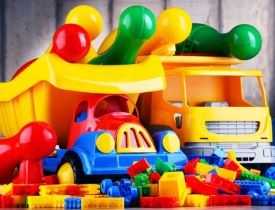
Description
Course Name: Certificate in Plastic Molding Science (Toys)
Course Id: CPMS/Q1001.
Eligibility: 10th Grade(High School) or Equivalent.
Duration: One Month.
Objective: The course aims to provide learners with a strong foundation in the science and technology of plastic molding, with a focus on toy manufacturing. It introduces different molding techniques such as injection molding, blow molding, and rotational molding, along with material selection, design considerations, and safety standards.
🎓 How to Enroll and Get Certified in Your Chosen Course:
✔️ Step 1: Choose the course you wish to get certified in.
✔️ Step 2: Click on the “Enroll Now” button.
✔️ Step 3: Proceed with the enrollment process.
✔️ Step 4: Enter your billing details and continue to course fee payment.
✔️ Step 5: You will be redirected to the payment gateway. Pay the course and exam fee using one of the following methods:
Debit/Credit Card, Wallet, Paytm, Net Banking, UPI, or Google Pay.
✔️ Step 6: After successful payment, you will receive your study material login ID and password via email within 48 hours of fee payment.
✔️ Step 7: Once you complete the course, take the online examination.
✔️ Step 8: Upon passing the examination, you will receive:
• A soft copy (scanned) of your certificate via email within 7 days of examination.
• A hard copy (original with official seal and signature) sent to your address within 45 day of declaration of result.
✔️ Step 9: After certification, you will be offered job opportunities aligned with your area of interest.
Online Examination Detail:
Duration- 60 minutes.
No. of Questions- 30. (Multiple Choice Questions).
Maximum Marks- 100, Passing Marks- 40%.
There is no negative marking in this module.
| Marking System: | ||||||
| S.No. | No. of Questions | Marks Each Question | Total Marks | |||
| 1 | 10 | 5 | 50 | |||
| 2 | 5 | 4 | 20 | |||
| 3 | 5 | 3 | 15 | |||
| 4 | 5 | 2 | 10 | |||
| 5 | 5 | 1 | 5 | |||
| 30 | 100 | |||||
| How Students will be Graded: | ||||||
| S.No. | Marks | Grade | ||||
| 1 | 91-100 | O (Outstanding) | ||||
| 2 | 81-90 | A+ (Excellent) | ||||
| 3 | 71-80 | A (Very Good) | ||||
| 4 | 61-70 | B (Good) | ||||
| 5 | 51-60 | C (Average) | ||||
| 6 | 40-50 | P (Pass) | ||||
| 7 | 0-40 | F (Fail) | ||||
🌟 Key Benefits of Certification- Earning a professional certification not only validates your skills but also enhances your employability. Here are the major benefits you gain:
✅ Practical, Job-Ready Skills – Our certifications are designed to equip you with real-world, hands-on skills that match current industry demands — helping you become employment-ready from day one.
📜 Lifetime Validity – Your certification is valid for a lifetime — no renewals or expirations. It serves as a permanent proof of your skills and training.
🔍 Lifetime Certificate Verification – Employers and institutions can verify your certification anytime through a secure and reliable verification system — adding credibility to your qualifications.
🎯 Industry-Aligned Certification –All certifications are developed in consultation with industry experts to ensure that what you learn is current, relevant, and aligned with market needs.
💼 Preferred by Employers – Candidates from ISO-certified institutes are often prioritized by recruiters due to their exposure to standardized, high-quality training.
🤝 Free Job Assistance Based on Your Career Interests – Receive personalized job assistance and career guidance in your preferred domain, helping you land the right role faster.
Syllabus
Introduction to Plastic and Toy Manufacturing: Overview of the toy industry, Types of toys made from plastic, Importance of plastic molding in toy production, History and evolution of plastic toys, Categories of plastics used in toys, Role of plastic toys in child development, Market trends and consumer preferences, Safety standards for plastic toys, Regulatory frameworks for toy manufacturing, Environmental concerns and recyclable toys.
Types and Properties of Plastics Used in Toys: Thermoplastics vs thermosetting plastics, Common plastics in toys (PP, PE, ABS, PVC), Physical and mechanical properties of plastics, Heat resistance and durability of toy materials, Non-toxic and child-safe plastics, Additives used in plastic molding, Plastic grades and quality assessment, Plastic granules and pellet preparation, Recycling of plastic for toys, Sourcing and storage of plastic materials.
Plastic Molding Techniques for Toys: Injection molding process and parameters, Blow molding for hollow toys, Rotational molding for complex shapes, Compression molding basics, Thermoforming for plastic sheets, Multi-cavity and hot-runner molds, Use of 3D printing in toy prototyping, Cycle time optimization, Defect analysis in molded toys, Post-molding operations (trimming, finishing).
Molding Machines and Tooling: Types of molding machines, Parts of an injection molding machine, Mold design and maintenance, Die and tooling materials, Mold cooling and temperature control, Machine setup and calibration, Safety precautions during machine operation, Maintenance and troubleshooting of machines, Automation in toy molding, Vendor selection and cost estimation.
Design and Prototyping of Plastic Toys: Principles of toy design, Ergonomics and safety in toy design, Sketching and CAD modeling of toys, Rapid prototyping techniques, Use of software (SolidWorks, AutoCAD), Material selection based on design, Prototype testing and modification, Integration of sound and motion features, Mold design from prototypes, Approval and standardization of designs.
Toy Safety Standards and Quality Control: IS, ASTM, and EN standards for toy safety, Physical and chemical testing of toys, Non-toxic certifications and labeling, Quality checks during production, Drop, bite, and impact testing, Choking hazard analysis, Age-appropriate design considerations, Documentation and compliance protocols, Batch testing and traceability, Recalls and corrective action procedures.
After successful completion of the Certificate in Plastic Molding Science (Toys) program, graduates acquire specialized knowledge in plastic molding techniques, toy design, material selection, quality control, and production management focused on the toy manufacturing sector. Given the growing demand for quality and safe plastic toys in India, this program opens up diverse career opportunities in manufacturing, quality assurance, product development, and entrepreneurship.
✅ Career Options After Certificate in Plastic Molding Science (Toys) (India)
| Job Role | Job Description | Average Salary Range (per annum) |
|---|---|---|
| Plastic Molding Technician | Operates molding machines to manufacture plastic toy components, monitors machine parameters. | ₹2 – ₹4 LPA |
| Quality Control Inspector (Toys) | Checks finished toys for defects, safety compliance (e.g., BIS standards), and quality assurance. | ₹2.5 – ₹4.5 LPA |
| Product Designer (Junior Level) | Assists in designing plastic toy models, selects materials, and prepares prototypes. | ₹3 – ₹5 LPA |
| Production Supervisor | Oversees daily operations in the toy molding unit, manages workforce and production schedules. | ₹3 – ₹6 LPA |
| Safety Compliance Officer | Ensures toys meet national safety standards and regulatory compliance (e.g., IS 9873). | ₹3 – ₹6.5 LPA |
| Sales & Marketing Executive | Markets plastic toys to wholesalers, retailers, and export markets. | ₹2.5 – ₹5 LPA (plus incentives) |
| Maintenance Technician | Maintains and troubleshoots plastic molding machinery and related equipment. | ₹2.5 – ₹5 LPA |
| Entrepreneur – Plastic Toy Manufacturing | Starts small-scale plastic toy manufacturing or molding business, including design and marketing. | ₹4 – ₹15+ LPA (profit-dependent) |
| Supply Chain & Inventory Coordinator | Manages procurement of raw plastic materials and inventory of finished products. | ₹2 – ₹4.5 LPA |
🏭 Top Employers & Sectors
-
Plastic Toy Manufacturers: Funskool, Mattel India, Playskool, ITC Toys
-
Plastic Product Manufacturing SMEs focusing on toys and novelties
-
Exporters of Plastic Toys to global markets
-
OEMs supplying plastic toy components to large brands
-
Toy Design and Development Firms
📈 Career Growth Path
-
Technician → Production Supervisor → Plant Manager
-
QC Inspector → Quality Manager → Compliance Officer
-
Product Designer (Junior) → Senior Designer → Product Development Manager
-
Sales Executive → Sales Manager → Marketing Director
💼 Entrepreneurial Opportunities
Graduates can:
-
Launch small-scale plastic toy molding units catering to domestic or export markets
-
Develop customized or eco-friendly toy lines using sustainable plastics
-
Partner with designers and retailers for contract manufacturing
-
Explore online marketplaces to sell unique plastic toys
💰 Earnings Potential for Entrepreneurs:
-
Small-scale unit: ₹20,000 – ₹70,000/month profit
-
Medium-scale unit: ₹5 – ₹15+ LPA depending on capacity and sales channels



Reviews
There are no reviews yet.