Description
Certification Name: Certificate in Sewing Machine Operator
Course Id: CSMO/Q0001.
Eligibility: 10th (High School) or Equivalent.
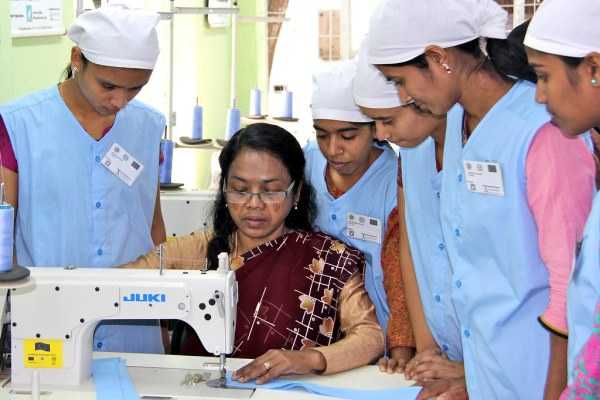
Objective: This course is designed to equip participants with the practical skills and technical knowledge required to operate various types of sewing machines used in garment manufacturing. Participants will learn about machine setup, threading, operation, and maintenance to ensure smooth and efficient sewing processes. The curriculum covers key sewing techniques such as straight stitching, overlocking, buttonholes, and decorative stitching, as well as understanding fabric types and their corresponding sewing requirements.
Duration: Three Month.
 How to Enroll and Get Certified in Your Chosen Course:
 Step 1: Choose the course you wish to get certified in.
Step 2: Click on the “Enroll Now” button.
Step 3: Proceed with the enrollment process.
Step 4: Enter your billing details and continue to course fee payment.
Step 5: You will be redirected to the payment gateway. Pay the course and exam fee using one of the following methods:
Debit/Credit Card, Wallet, Paytm, Net Banking, UPI, or Google Pay.
Step 6: After successful payment, you will receive your study material login ID and password via email within 48 hours of fee payment.
Step 7: Once you complete the course, take the online examination.
Step 8: Upon passing the examination, you will receive:
• A soft copy (scanned) of your certificate via email within 7 days of examination.
• A hard copy (original with official seal and signature) sent to your address within 45 day of declaration of result.
Step 9: After certification, you will be offered job opportunities aligned with your area of interest.
Online Examination Detail:
Duration- 60 minutes.
No. of Questions- 30. (Multiple Choice Questions).
Maximum Marks- 100, Passing Marks- 40%.
There is no negative marking in this module.
| Marking System: | ||||||
| S.No. | No. of Questions | Marks Each Question | Total Marks | |||
| 1 | 10 | 5 | 50 | |||
| 2 | 5 | 4 | 20 | |||
| 3 | 5 | 3 | 15 | |||
| 4 | 5 | 2 | 10 | |||
| 5 | 5 | 1 | 5 | |||
| 30 | 100 | |||||
| How Students will be Graded: | ||||||
| S.No. | Marks | Grade | ||||
| 1 | 91-100 | O (Outstanding) | ||||
| 2 | 81-90 | A+ (Excellent) | ||||
| 3 | 71-80 | A (Very Good) | ||||
| 4 | 61-70 | B (Good) | ||||
| 5 | 51-60 | C (Average) | ||||
| 6 | 40-50 | P (Pass) | ||||
| 7 | 0-40 | F (Fail) | ||||
 Key Benefits of Certification- Earning a professional certification not only validates your skills but also enhances your employability. Here are the major benefits you gain:
 Practical, Job-Ready Skills – Our certifications are designed to equip you with real-world, hands-on skills that match current industry demands — helping you become employment-ready from day one.
 Lifetime Validity – Your certification is valid for a lifetime — no renewals or expirations. It serves as a permanent proof of your skills and training.
 Lifetime Certificate Verification – Employers and institutions can verify your certification anytime through a secure and reliable verification system — adding credibility to your qualifications.
 Industry-Aligned Certification –All certifications are developed in consultation with industry experts to ensure that what you learn is current, relevant, and aligned with market needs.
 Preferred by Employers – Candidates from ISO-certified institutes are often prioritized by recruiters due to their exposure to standardized, high-quality training.
 Free Job Assistance Based on Your Career Interests – Receive personalized job assistance and career guidance in your preferred domain, helping you land the right role faster.
Assessment Modules:
Module 1: Introduction to Sewing Machines and Equipment: Overview of Different Types of Sewing Machines (Flat-bed, Cylinder-bed, Overlock, Coverstitch, etc.), Components of a Sewing Machine and Their Functions, Understanding Machine Settings and Adjustments, Importance of Thread Types and Needle Selection, Operating Sewing Machines Safely and Efficiently, Troubleshooting Common Sewing Machine Issues.
Module 2: Fabric Handling and Preparation for Sewing: Preparing and Inspecting Fabrics Before Sewing, Understanding Fabric Properties (Woven, Knitted, Stretch, etc.), Proper Handling to Prevent Damage or Stretching, Understanding Fabric Grain and How It Affects Sewing, Measuring and Marking Fabric for Accurate Cutting and Sewing, Managing Fabric Shrinkage and Pre-treatment Techniques.
Module 3: Sewing Techniques and Stitches: Introduction to Different Types of Stitches (Straight Stitch, Zigzag, Overlock, Blind Stitch, etc.), Understanding Seam Types and Their Applications, Correct Stitch Length and Tension Settings, Handling Specialty Threads (Elastic, Metallic, etc.), Sewing Techniques for Different Fabrics (Delicate, Heavyweight, Stretch), Performing Decorative Stitches and Embellishments.
Module 4: Sewing Machine Maintenance and Adjustment: Routine Maintenance of Sewing Machines (Lubrication, Cleaning, etc.), Adjusting Stitch Tension and Feed Mechanism, Replacing Needles and Presser Feet, Troubleshooting and Repairing Common Machine Malfunctions, Ensuring Consistent Sewing Speed and Quality, Preventing Thread Breakage and Machine Jam Issues.
Module 5: Quality Control and Fabric Alignment: Ensuring Accurate Fabric Alignment During Sewing, Inspecting and Adjusting for Consistent Seam Quality, Quality Standards for Stitches and Seams (No Skipped Stitches, Even Tension), Monitoring and Controlling Stitching Accuracy, Managing Waste and Thread Trimming, Checking for Defects (Fabric Defects, Incorrect Stitching, etc.).
Module 6: Efficiency, Safety, and Work Environment: Improving Sewing Speed Without Compromising Quality, Time Management and Meeting Production Targets, Ergonomics and Safety Measures in the Sewing Area, Organizing the Sewing Workstation for Maximum Efficiency, Managing Production Line Flow and Reducing Downtime, Adhering to Workplace Safety Standards and Practices (Handling Tools, Electrical Equipment, etc.).
career options and salary ranges in India after completing a Certificate in Sewing Machine Operator course:
1. Sewing Machine Operator / Garment Operator
Role: Operate industrial or manual sewing machines to stitch garments and textiles with accuracy and speed.
Salary Range: ₹1.8 LPA – ₹3 LPA (entry-level), ₹3 LPA – ₹4.5 LPA (experienced)
2. Garment Technician / Tailoring Operator
Role: Handle stitching of various garment types, maintain sewing machines, and ensure quality output.
Salary Range: ₹2 LPA – ₹4 LPA
3. Production Line Operator / Apparel Manufacturing Staff
Role: Work in garment production lines, coordinate with team members, and ensure timely completion of stitching tasks.
Salary Range: ₹2 LPA – ₹4.5 LPA
4. Sample Stitching Operator
Role: Prepare sample garments for designers, maintain patterns, and execute precise stitching according to specifications.
Salary Range: ₹2 LPA – ₹4 LPA
5. Quality Control / Sewing Inspector
Role: Inspect stitched garments for defects, accuracy, and finishing quality before sending for packaging or delivery.
Salary Range: ₹2.5 LPA – ₹4.5 LPA
6. Freelance / Home-Based Sewing Operator
Role: Provide stitching services on a freelance or home-based basis, including custom tailoring or small-scale production.
Earnings: ₹2 LPA – ₹5 LPA+ depending on workload and clients
Experience-Based Salary Growth
| Experience Level | Salary Range (INR/Year) |
|---|---|
| Entry (0–2 yrs) | ₹1.8 L – ₹3 L |
| Mid (3–5 yrs) | ₹3 L – ₹4.5 L |
| Senior (5+ yrs) | ₹4.5 L – ₹6 L+ |
Top Employers in India
-
Garment manufacturing units (Bangalore, Tirupur, Delhi, Ludhiana, Chennai)
-
Export-oriented apparel factories
-
Small-scale tailoring and stitching units
-
Fashion and textile brands for sample making
Higher Career Growth Paths
-
Senior Sewing Machine Operator / Production Supervisor
-
Garment Technician / Sample Coordinator
-
Production Line Supervisor / Team Leader
-
Entrepreneur / Small-scale tailoring business owner
Salary Potential at Senior Levels: ₹5 LPA – ₹8 LPA+