
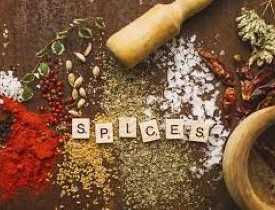
Description
Course Name: Certificate in Spice Grinding Business
Course Id: CSGB/Q1001.
Eligibility: 10th Grade(High School) or Equivalent.
Duration: One Month.
Objective: The objective of this course is to equip learners with the knowledge and skills needed to establish and operate a successful spice grinding business. The course covers selection and procurement of raw spices, grinding techniques, quality control, packaging, hygiene standards, and marketing strategies, empowering learners to add value to raw spices and meet market demand efficiently.
🎓 How to Enroll and Get Certified in Your Chosen Course:
✔️ Step 1: Choose the course you wish to get certified in.
✔️ Step 2: Click on the “Enroll Now” button.
✔️ Step 3: Proceed with the enrollment process.
✔️ Step 4: Enter your billing details and continue to course fee payment.
✔️ Step 5: You will be redirected to the payment gateway. Pay the course and exam fee using one of the following methods:
Debit/Credit Card, Wallet, Paytm, Net Banking, UPI, or Google Pay.
✔️ Step 6: After successful payment, you will receive your study material login ID and password via email within 48 hours of fee payment.
✔️ Step 7: Once you complete the course, take the online examination.
✔️ Step 8: Upon passing the examination, you will receive:
• A soft copy (scanned) of your certificate via email within 7 days of examination.
• A hard copy (original with official seal and signature) sent to your address within 45 day of declaration of result.
✔️ Step 9: After certification, you will be offered job opportunities aligned with your area of interest.
Online Examination Detail:
Duration- 60 minutes.
No. of Questions- 30. (Multiple Choice Questions).
Maximum Marks- 100, Passing Marks- 40%.
There is no negative marking in this module.
| Marking System: | ||||||
| S.No. | No. of Questions | Marks Each Question | Total Marks | |||
| 1 | 10 | 5 | 50 | |||
| 2 | 5 | 4 | 20 | |||
| 3 | 5 | 3 | 15 | |||
| 4 | 5 | 2 | 10 | |||
| 5 | 5 | 1 | 5 | |||
| 30 | 100 | |||||
| How Students will be Graded: | ||||||
| S.No. | Marks | Grade | ||||
| 1 | 91-100 | O (Outstanding) | ||||
| 2 | 81-90 | A+ (Excellent) | ||||
| 3 | 71-80 | A (Very Good) | ||||
| 4 | 61-70 | B (Good) | ||||
| 5 | 51-60 | C (Average) | ||||
| 6 | 40-50 | P (Pass) | ||||
| 7 | 0-40 | F (Fail) | ||||
🌟 Key Benefits of Certification- Earning a professional certification not only validates your skills but also enhances your employability. Here are the major benefits you gain:
✅ Practical, Job-Ready Skills – Our certifications are designed to equip you with real-world, hands-on skills that match current industry demands — helping you become employment-ready from day one.
📜 Lifetime Validity – Your certification is valid for a lifetime — no renewals or expirations. It serves as a permanent proof of your skills and training.
🔍 Lifetime Certificate Verification – Employers and institutions can verify your certification anytime through a secure and reliable verification system — adding credibility to your qualifications.
🎯 Industry-Aligned Certification –All certifications are developed in consultation with industry experts to ensure that what you learn is current, relevant, and aligned with market needs.
💼 Preferred by Employers – Candidates from ISO-certified institutes are often prioritized by recruiters due to their exposure to standardized, high-quality training.
🤝 Free Job Assistance Based on Your Career Interests – Receive personalized job assistance and career guidance in your preferred domain, helping you land the right role faster.
Syllabus:-
Introduction to Spice Industry: Overview of the Spice Industry and Its Market Potential, History and Cultural Importance of Spices, Major Spice-Producing Countries and Regions, Types of Spices and Their Uses, Demand and Supply Chain in the Spice Industry, Role of Spices in Culinary and Medicinal Applications, Government Policies and Support for Spice Businesses, Emerging Trends in the Spice Market.
Selection and Sourcing of Raw Materials: Types of Raw Spices and Their Quality Parameters, Factors Affecting the Quality of Spices, Sourcing Strategies and Supplier Selection, Importance of Organic and Sustainable Sourcing, Pre-Processing Requirements for Spices, Role of Cooperatives and Spice Boards, Impact of Climate and Soil on Spice Quality, Storage and Handling of Raw Spices.
Spice Grinding Techniques and Machinery: Traditional vs. Modern Grinding Methods, Types of Grinding Equipment (Hammer Mills, Pulverizers, Grinders), Choosing the Right Machinery for Different Spices, Factors Affecting the Grinding Process, Importance of Uniform Particle Size, Energy Efficiency in Grinding Operations, Maintenance and Troubleshooting of Machines, Safety Precautions in Spice Grinding Units.
Quality Control and Food Safety Standards: Importance of Quality Control in Spice Processing, Common Contaminants in Spices and Their Prevention, Standardization and Grading of Ground Spices, Packaging and Labeling Compliance, Food Safety Management Systems (HACCP, FSSAI, ISO), Testing Methods for Purity and Adulteration, Regulations for Exporting Spices, Best Practices for Hygiene and Sanitation.
Packaging and Storage of Spices: Types of Packaging Materials for Spices, Factors Affecting Shelf Life of Ground Spices, Moisture Control and Preservation Techniques, Role of Vacuum and Modified Atmosphere Packaging, Eco-Friendly and Sustainable Packaging Solutions, Storage Conditions to Prevent Spoilage, Cost-Effective Packaging Strategies, Labeling and Branding Guidelines.
Marketing and Branding Strategies: Identifying Target Markets and Consumer Preferences, Branding and Positioning of Spice Products, Digital Marketing and E-Commerce Strategies, Pricing Strategies for Competitive Markets, Wholesale vs. Retail Marketing Approaches, Creating a Unique Selling Proposition (USP), Importance of Customer Feedback and Market Research, Trade Shows and Networking Opportunities.
After successful completion of the Certificate in Spice Grinding Business program, graduates gain skills in spice selection, grinding techniques, quality control, packaging, and marketing of ground spices. India’s rich culinary heritage and strong domestic and export demand for spices offer numerous career and entrepreneurial opportunities in this sector.
✅ Career Options After Certificate in Spice Grinding Business (India)
| Job Role | Job Description | Average Salary Range (per annum) |
|---|---|---|
| Spice Grinding Operator | Operates grinding machines, ensures proper grinding and blending of spices. | ₹1.8 – ₹3.5 LPA |
| Quality Control Analyst | Tests ground spices for purity, aroma, and compliance with food safety standards (FSSAI). | ₹2 – ₹4 LPA |
| Packaging Supervisor | Manages packaging process, labeling, and ensures hygienic handling of ground spices. | ₹2 – ₹4 LPA |
| Production Supervisor | Oversees spice grinding production, manages workforce and scheduling. | ₹3 – ₹6 LPA |
| Sales & Marketing Executive | Promotes spice products to retailers, wholesalers, and export markets. | ₹2.5 – ₹5 LPA (plus incentives) |
| Supply Chain & Inventory Manager | Handles procurement of raw spices and inventory of finished products. | ₹2 – ₹4.5 LPA |
| Entrepreneur – Spice Grinding Unit Owner | Starts and manages small or medium-scale spice grinding and packaging business. | ₹4 – ₹15+ LPA (profit-dependent) |
| Food Safety & Compliance Officer | Ensures adherence to food safety and hygiene standards in the spice processing unit. | ₹3 – ₹6 LPA |
🏢 Top Employers & Sectors
-
Spice Processing Companies: Everest Spices, MDH, Catch, Eastern Condiments
-
Small and Medium Enterprises (SMEs) specializing in spice grinding and packaging
-
Exporters of Indian Spices
-
Retail Chains and Local Spice Shops
📈 Career Growth Path
-
Operator → Production Supervisor → Plant Manager
-
QC Analyst → Quality Manager → Food Safety Officer
-
Sales Executive → Sales Manager → Marketing Head
💼 Entrepreneurial Opportunities
Graduates can:
-
Set up small-scale spice grinding and packaging units for local markets
-
Create specialty spice blends and masalas targeting niche or regional tastes
-
Explore organic and clean-label spice products for premium markets
-
Build distribution networks to supply retailers, restaurants, and exporters
💰 Earnings Potential for Entrepreneurs:
-
Small unit: ₹20,000 – ₹70,000/month profit
-
Medium unit: ₹5 – ₹15+ LPA based on scale and market outreach


Reviews
There are no reviews yet.