Description
Certification Name: Certificate in Textile Manager
Course Id: CTM/Q0001.
Eligibility: Graduation or Equivalent.
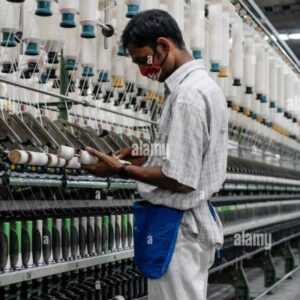
Objective: The Certified Textile Manager course aims to develop highly skilled professionals capable of managing and optimizing all aspects of textile manufacturing and business operations. The program provides in-depth knowledge in areas such as textile fibers and materials, production techniques, dyeing and finishing processes, quality assurance, sustainability practices, and supply chain logistics.
Duration: Three Month.
 How to Enroll and Get Certified in Your Chosen Course:
 Step 1: Choose the course you wish to get certified in.
Step 2: Click on the “Enroll Now” button.
Step 3: Proceed with the enrollment process.
Step 4: Enter your billing details and continue to course fee payment.
Step 5: You will be redirected to the payment gateway. Pay the course and exam fee using one of the following methods:
Debit/Credit Card, Wallet, Paytm, Net Banking, UPI, or Google Pay.
Step 6: After successful payment, you will receive your study material login ID and password via email within 48 hours of fee payment.
Step 7: Once you complete the course, take the online examination.
Step 8: Upon passing the examination, you will receive:
• A soft copy (scanned) of your certificate via email within 7 days of examination.
• A hard copy (original with official seal and signature) sent to your address within 45 day of declaration of result.
Step 9: After certification, you will be offered job opportunities aligned with your area of interest.
Online Examination Detail:
Duration- 60 minutes.
No. of Questions- 30. (Multiple Choice Questions).
Maximum Marks- 100, Passing Marks- 40%.
There is no negative marking in this module.
| Marking System: | ||||||
| S.No. | No. of Questions | Marks Each Question | Total Marks | |||
| 1 | 10 | 5 | 50 | |||
| 2 | 5 | 4 | 20 | |||
| 3 | 5 | 3 | 15 | |||
| 4 | 5 | 2 | 10 | |||
| 5 | 5 | 1 | 5 | |||
| 30 | 100 | |||||
| How Students will be Graded: | ||||||
| S.No. | Marks | Grade | ||||
| 1 | 91-100 | O (Outstanding) | ||||
| 2 | 81-90 | A+ (Excellent) | ||||
| 3 | 71-80 | A (Very Good) | ||||
| 4 | 61-70 | B (Good) | ||||
| 5 | 51-60 | C (Average) | ||||
| 6 | 40-50 | P (Pass) | ||||
| 7 | 0-40 | F (Fail) | ||||
 Key Benefits of Certification- Earning a professional certification not only validates your skills but also enhances your employability. Here are the major benefits you gain:
 Practical, Job-Ready Skills – Our certifications are designed to equip you with real-world, hands-on skills that match current industry demands — helping you become employment-ready from day one.
 Lifetime Validity – Your certification is valid for a lifetime — no renewals or expirations. It serves as a permanent proof of your skills and training.
 Lifetime Certificate Verification – Employers and institutions can verify your certification anytime through a secure and reliable verification system — adding credibility to your qualifications.
 Industry-Aligned Certification –All certifications are developed in consultation with industry experts to ensure that what you learn is current, relevant, and aligned with market needs.
 Preferred by Employers – Candidates from ISO-certified institutes are often prioritized by recruiters due to their exposure to standardized, high-quality training.
 Free Job Assistance Based on Your Career Interests – Receive personalized job assistance and career guidance in your preferred domain, helping you land the right role faster.
Assessment Modules:
Module 1: Textile Fibers and Their Properties: Natural fibers (cotton, wool, silk, flax), Man-made fibers (polyester, nylon, rayon, acrylic), Fiber identification methods, Physical and chemical properties of fibers, Fiber testing and standards, Environmental impact of fiber production
Module 2: Yarn Manufacturing and Technology: Spinning processes (ring, rotor, air-jet), Yarn classification and numbering systems, Yarn properties and testing, Blending and mixing of fibers, Recent innovations in spinning, Yarn quality control
Module 3: Fabric Manufacturing Techniques: Weaving fundamentals and loom types, Knitting techniques and machines, Nonwoven fabric production, Fabric structures and design, Fabric defects and inspection, Advanced fabric technologies (3D fabrics, smart textiles)
Module 4: Textile Wet Processing and Finishing: Pre-treatment processes (scouring, bleaching, mercerizing), Dyeing methods (batch, continuous, solution), Printing techniques (screen, digital, heat transfer), Finishing processes (mechanical and chemical), Color fastness and testing, Eco-friendly wet processing practices
Module 5: Textile Quality Management and Standards: Quality assurance vs quality control, Textile testing standards (ISO, AATCC, BIS), Statistical quality control tools, Lean manufacturing in textiles, Certification and compliance (OEKO-TEX, GOTS, ZDHC), Total quality management (TQM) in textile industry
Module 6: Textile Business Management and Sustainability: Textile supply chain and logistics, Inventory and production planning, Costing and budgeting in textile units, Marketing and export management, Sustainability and circular economy in textiles, Labor laws and ethical practices in the textile industry.
Career Opportunities After
Certificate in Textile Manager
The Certificate in Textile Manager prepares professionals to manage operations, production, and quality control in the textile and garment industry. The program develops expertise in textile manufacturing processes, supply chain management, production planning, quality assurance, inventory management, cost control, vendor coordination, and team supervision suitable for textile mills, garment units, export houses, retail brands, and manufacturing companies.
Graduates are in demand across textile manufacturing units, apparel production houses, garment export companies, retail supply chains, and textile-based e-commerce businesses.
Key Job Roles & Salary Outlook (India)
1. Textile Production Manager
Role: Supervises production schedules, monitors workflow, and ensures efficient operations in textile units.
Salary: ₹4 – 8 LPA | ₹8 – 15 LPA (Experienced)
2. Quality Assurance Manager – Textiles
Role: Ensures product quality, conducts inspections, and maintains compliance with industry standards.
Salary: ₹5 – 10 LPA | ₹10 – 18 LPA
3. Supply Chain & Inventory Coordinator
Role: Manages raw material procurement, inventory levels, and vendor coordination.
Salary: ₹4 – 8 LPA | ₹8 – 15 LPA
4. Garment Production Supervisor
Role: Monitors daily operations in garment manufacturing, ensuring timely delivery and quality standards.
Salary: ₹4 – 9 LPA | ₹9 – 16 LPA
5. Textile Export Operations Manager
Role: Oversees production planning, quality compliance, and shipment coordination for export orders.
Salary: ₹6 – 12 LPA | ₹12 – 20+ LPA
Top Employment Sectors
-
Textile Mills & Manufacturing Units
-
Garment & Apparel Production Companies
-
Export Houses & Trading Firms
-
Retail & E-Commerce Textile Brands
-
Supply Chain & Logistics for Textile Industry
-
Textile Quality Testing & Certification Agencies
Skills That Increase Career Growth
-
Textile Production Planning & Workflow Management
-
Quality Assurance & Compliance Standards
-
Inventory & Supply Chain Coordination
-
Costing, Budgeting & Resource Optimization
-
Vendor & Team Management
-
Knowledge of Fabric & Material Properties
-
Production Reporting & Documentation
-
Lean Manufacturing & Efficiency Techniques
Career Growth Path
Production Assistant → Textile Supervisor → Textile Manager → Senior Production / Operations Manager → Plant / Unit Head → Textile Operations Director
Entrepreneurial Opportunities
-
Garment Manufacturing Unit
-
Textile Supply & Export Business
-
Quality Assurance & Testing Consultancy
-
Apparel Production & Retail Brand
-
Textile Production Management Services
Earning Potential (India)
Entry Level: ₹3 – 6 LPA
Mid Level: ₹6 – 12 LPA
Senior Level: ₹12 – 25+ LPA
Independent Textile Operations / Consultant: ₹15 – 40+ LPA depending on scale, clients, and production volume